
Summit County, Ohio
Cuyahoga Falls trees are too close to too many houses
Tight lots, big silver maples, and the gorge corridor add up to a city where one bad limb is one bad storm away from real damage. We do the planning that keeps it from being your house.
- ISA Certified Arborist
- Fully insured
- Free estimates

About this area
Direct, careful tree work in Cuyahoga Falls
Cuyahoga Falls is a city of trees that grew up before anyone thought about how much room they would need. Roots are lifting sidewalks, limbs are over rooflines, and the gorge wind funnels storms in ways that most national arborists never plan for. We plan for it. Every Cuyahoga Falls removal is rigged carefully and dropped in pieces — there is rarely room to fell anything whole in this city, and we do not pretend otherwise.
“In Cuyahoga Falls the silver maple is almost always too big and too close. The question is how it comes apart, not whether it has to.”
Tyler Griffith, ISA Certified Arborist
- ISA Certified Arborist
- OH-7015A
- Fully insured
- Liability and workers’ comp
- Estimates
- Free, in person, in writing
- Response
- Same day
What we do
Full tree care for Cuyahoga Falls properties
Every TG-TreeCare service is available to Cuyahoga Falls homeowners. All work is performed to ISA standards with full cleanup included.
Get a Free Estimate


Local knowledge
What Cuyahoga Falls trees are doing right now
Limb failures over driveways, roots pushing into foundations, and storm cleanup along the gorge are constants on our Cuyahoga Falls schedule.
Silver maple limb failure over homes and driveways
Root damage to older infrastructure from large tree roots
Tree proximity to structures on tight residential lots
Storm cleanup near the Cuyahoga River gorge
Cuyahoga Falls: river city, valley edge.
Cuyahoga Falls has held Tree City USA recognition since 1987, and the city's trees range from big maples on tight downtown-area lots to woodland that runs into the river gorge and the national park.
Older neighborhoods close to the river
The neighborhoods around Front Street, State Road and the north end of town were built close together, and many of their shade trees are now as large as they'll get. Silver maples and oaks planted in the middle of the last century hang over roofs, driveways and the street, and their roots have spent decades working under sidewalks and old sewer laterals.
Those trees can usually be kept with good pruning and regular checks, but they need someone looking at them. A heavy limb over a bedroom or a maple with a cracked union near the house is a problem worth catching before the next storm. When a tree has reached the point where keeping it isn't safe, we'll say so and plan the removal around the house and the neighbors.
The gorge, ravines and steep lots
The Cuyahoga River cuts a deep gorge through the city, and plenty of Falls properties sit on the slopes above it or along the ravines that feed it. Gorge Metro Park, with its sandstone ledges and hemlocks, shows the kind of ground these trees grow on: shallow soil over rock in places, wet seeps in others and steep grades everywhere.
Trees on those slopes lean toward the light and can be top-heavy over thin roots. Removal and pruning on a hillside needs more planning for footing, rigging and where wood can safely land. If you have a large tree above your house on a slope, or a tree leaning toward the ravine, an assessment is worth doing before a wet spring storm tests it.
The national park side of town
On the north and west sides of the city, toward the old Northampton area, lots get larger and woodier and border Cuyahoga Valley National Park. Those properties have more native trees, more deer and more wild edge, which brings its own concerns: dead ash along the woods, beech trees affected by beech leaf disease and invasive species spreading in from neighboring yards.
On these lots we often recommend managing the woodland edge instead of clearing it: removing hazards near the house and driveway, keeping healthy native trees and replacing invasives with natives that belong next to the park. Planting choices matter more here, because what you plant can spread into the valley.
Questions we hear locally
Does Cuyahoga Falls regulate trees on private property?
The city's code addresses trees that obstruct streets, sidewalks and other public places, and the city manages its street trees. For most trees on your own lot, routine work doesn't need city approval. We'll point out anything that looks like it's in the right-of-way.
Can you work on a tree on a steep lot above the gorge?
Yes. Slope jobs take more planning for rigging and footing, and we explain the method and price at the estimate. Some slope work is done by climbing and rigging rather than with heavy equipment.
What's wrong with the beech trees near the national park?
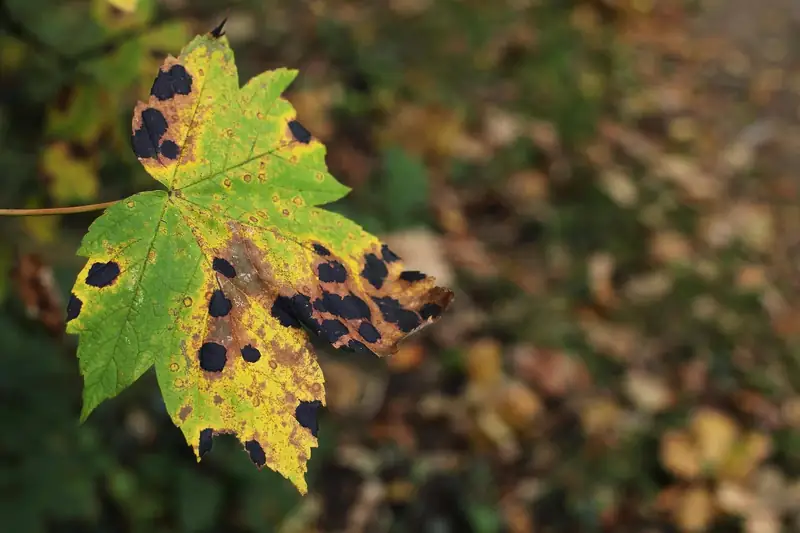
Many are affected by beech leaf disease, which causes dark bands between the leaf veins and thinning canopies. It's widespread in Northeast Ohio. We can assess whether a valuable beech is worth treating.
How quickly can you get to Cuyahoga Falls?
It's a short drive from our Kent base. Estimate requests usually get a same-day response.
Where we work
Cuyahoga Falls neighborhoods we serve
North Falls, the Front Street district, State Road and the Bailey Road corridor — all standard service.
- North Falls
- Front Street district
- State Road area
- Bailey Road corridor
Not listed? We likely serve your area. Call (330) 221-1617 to confirm.
Why TG-TreeCare
Cuyahoga Falls’s ISA-certified arborist
Tyler Griffith holds ISA Arborist Certification and the company carries full liability and workers’ compensation insurance. Estimates are free, in person and in writing, before any work is scheduled.
- Free on-site estimate, no obligation
- Our own trained crew, never subcontracted
- Full cleanup and debris removal included
- Serving Summit County since 2022
Serving Summit County
A Cuyahoga Falls tree need to come down?
We answer Cuyahoga Falls calls same day at (330) 221-1617.